As heavy-duty trucks continue to evolve, engine performance and cooling system requirements are also becoming more demanding.
For newer Freightliner Cascadia models, particularly 2022 and later configurations equipped with high-output Detroit engines, radiator design has become increasingly important. Higher engine output, increased thermal loads and demanding operating conditions place greater requirements on the cooling system.
For aftermarket radiator suppliers, simply replacing the original radiator with a conventional design may not always provide the durability and pressure resistance required for these newer applications.
At Hwanmai, we developed a high-pressure all-aluminum radiator solution for newer Freightliner Cascadia applications, focusing on stronger construction, improved pressure resistance and reliable long-term performance.
The cooling system of a heavy-duty diesel engine operates under significant thermal and hydraulic demands.
Modern Freightliner Cascadia trucks can be equipped with high-output Detroit engines, including DD13 and DD15 configurations. DTNA documentation specifies normal coolant operating temperatures around 175–195°F (79–91°C), with maximum coolant temperature for Detroit DD13/DD15/DD16 engines listed at 234°F (112°C).
This means that the radiator is not simply a heat exchanger. It is a critical structural component of the engine cooling system.
The radiator must simultaneously provide:
Efficient heat transfer
Stable coolant flow
Low flow restriction
Reliable sealing
Sufficient pressure resistance
Long-term durability under heavy-duty operating conditions
Detroit's technical documentation also emphasizes that cooling-system components must be capable of withstanding increased system pressure, particularly when higher-rated pressure caps or severe operating conditions are involved.
Many aftermarket heavy-duty truck radiators use an aluminum core with plastic tanks.
This design has several advantages, including:
Competitive manufacturing cost
Lightweight construction
High-volume production capability
Good heat-transfer performance
However, the radiator construction must be properly matched to the application.
For newer high-output Cascadia applications, the combination of temperature, coolant circulation, vibration and pressure places additional demands on the radiator's tubes, headers, tanks and joints.
If a conventional radiator design is not adequately engineered for the application, potential problems may include:
Coolant leakage
Tube or joint fatigue
Tank-to-core sealing problems
Weld-related failures
Reduced service life under severe operating conditions
This is particularly important for fleets and distributors looking for a reliable aftermarket replacement radiator.
The key question is not simply whether a radiator fits the truck. The key question is whether the radiator is engineered for the operating conditions of the truck.
To address the demanding requirements of newer Freightliner Cascadia applications, Hwanmai developed a high-pressure all-aluminum radiator design.
Instead of relying on a conventional plastic-tank construction, our radiator uses an all-aluminum structure with specially developed components.
The design focuses on three major areas:
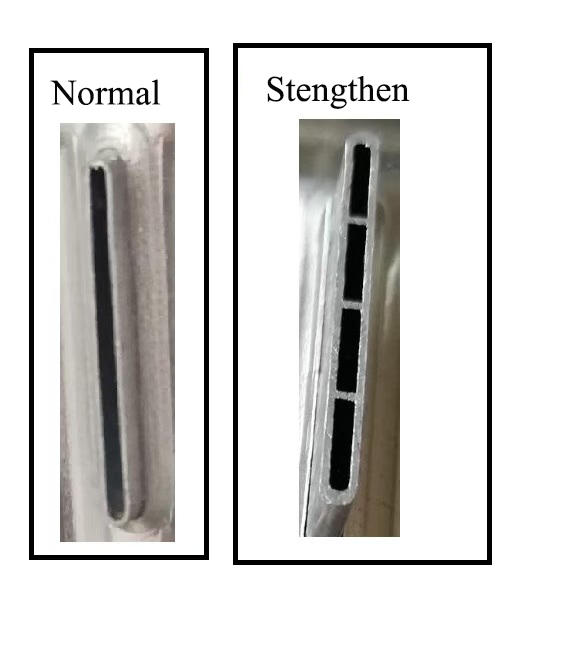
The radiator core uses high-pressure extruded aluminum tubes.
Compared with conventional tube construction, the extrusion design provides a stronger tube structure and allows internal reinforcement features to be incorporated into the tube.
Each tube incorporates an internal reinforcing rib structure, increasing structural strength and helping the tube withstand demanding pressure and operating conditions.
This is one of the key differences between our high-pressure Cascadia radiator and conventional aftermarket radiator designs.
The radiator uses cast aluminum tanks developed with dedicated tooling.
The cast construction allows the tank geometry to be precisely designed around the application while providing a robust aluminum struct
The entire radiator is constructed from aluminum components.
The core, tanks and connection areas are designed as an integrated system.
This provides several potential advantages for demanding heavy-duty applications:
Stronger overall construction
Improved pressure resistance
Reduced dependence on plastic tank components
More robust connection areas
Improved resistance to heavy-duty operating conditions
Clean and professional appearance
For a conventional aluminum-plastic radiator, the radiator core and plastic tank are joined together through a sealing and mechanical connection system.
This construction is widely used throughout the heavy-duty aftermarket and can provide excellent performance when correctly engineered.
However, for specific newer Cascadia applications where pressure, vibration and thermal cycling are major concerns, an all-aluminum construction provides another engineering approach.
By replacing the plastic tank with a cast aluminum tank and using reinforced extruded tubes, the radiator can be designed as a more structurally integrated assembly.
This is particularly valuable for customers looking for a premium aftermarket radiator solution for newer Freightliner Cascadia trucks.
Freightliner Cascadia is one of the most important heavy-duty truck platforms in the North American market.
As newer generations of trucks continue to use higher-output engines and increasingly sophisticated cooling systems, radiator suppliers need to go beyond basic OE replacement.
A successful aftermarket radiator should consider:
Vehicle application → Engine configuration → Cooling requirements → Pressure → Material → Tube construction → Tank construction → Welding → Testing
This is why Hwanmai focuses on application-specific radiator development rather than simply producing a generic replacement radiator.
Our high-pressure all-aluminum Cascadia radiator was developed specifically with the demands of newer Freightliner applications in mind.
Key design features include:
High-Pressure Extruded Tube
Reinforced internal tube structure for improved mechanical strength.
Cast Aluminum Tank
Dedicated tooling and cast aluminum construction for a stronger tank structure.
All-Aluminum Construction
An integrated aluminum design without conventional plastic tanks.
Heavy-Duty Application Focus
Designed for demanding North American truck operating conditions.
Application-Specific Engineering
Developed around the requirements of newer Freightliner Cascadia applications rather than using a generic radiator design.
For distributors and radiator specialists serving the North American heavy-duty aftermarket, newer Cascadia applications represent an important product opportunity.
When selecting a replacement radiator, distributors should look beyond price and basic fitment.
Important questions include:
What engine is the truck equipped with?
What is the required cooling capacity?
What pressure conditions does the cooling system operate under?
What tube construction is used?
How are the tubes reinforced?
What type of tank construction is used?
How are the tanks and core connected?
Has the radiator been pressure tested?
Is the radiator designed specifically for the application?
A lower-cost radiator may appear attractive initially, but a radiator failure can result in coolant loss, vehicle downtime and significant repair costs.
For fleets and distributors, reliability and application compatibility should always be considered together with purchase price.
Hwanmai provides cooling-system products for the heavy-duty aftermarket, including:
Heavy-Duty Truck Radiators
All-Aluminum Radiators
Aluminum-Plastic Radiators
Charge Air Coolers
A/C Condensers
Custom Cooling Cores
Our engineering team works with customers to develop cooling products according to specific vehicle applications, dimensions, materials and performance requirements.
For newer Freightliner Cascadia applications, our high-pressure all-aluminum radiator represents our approach to developing stronger and more application-focused cooling solutions for modern heavy-duty trucks.
If you are looking for an aftermarket radiator supplier for 2022+ Freightliner Cascadia applications, contact Hwanmai to discuss your required application, OE number, dimensions and cooling-system requirements.
Hwanmai — Reliable Cooling Solutions for Heavy-Duty Applications.
Hwanmai passed IATF 16949:2016 certification iss
Explore the latest industrial news, manufacturin
Learn why newer Freightliner Cascadia applicatio
Contact: Kelvin
Phone: +86-17837873698
Tel: +86-17837873698
Email: kelvin@hwanmai.com
Add: Room 545, 5th Floor, Shandong Chamber of Commerce Building, Intersection of 7th Street and Anshun Road, Henan Province, China
We chat